Property · Union Post UK
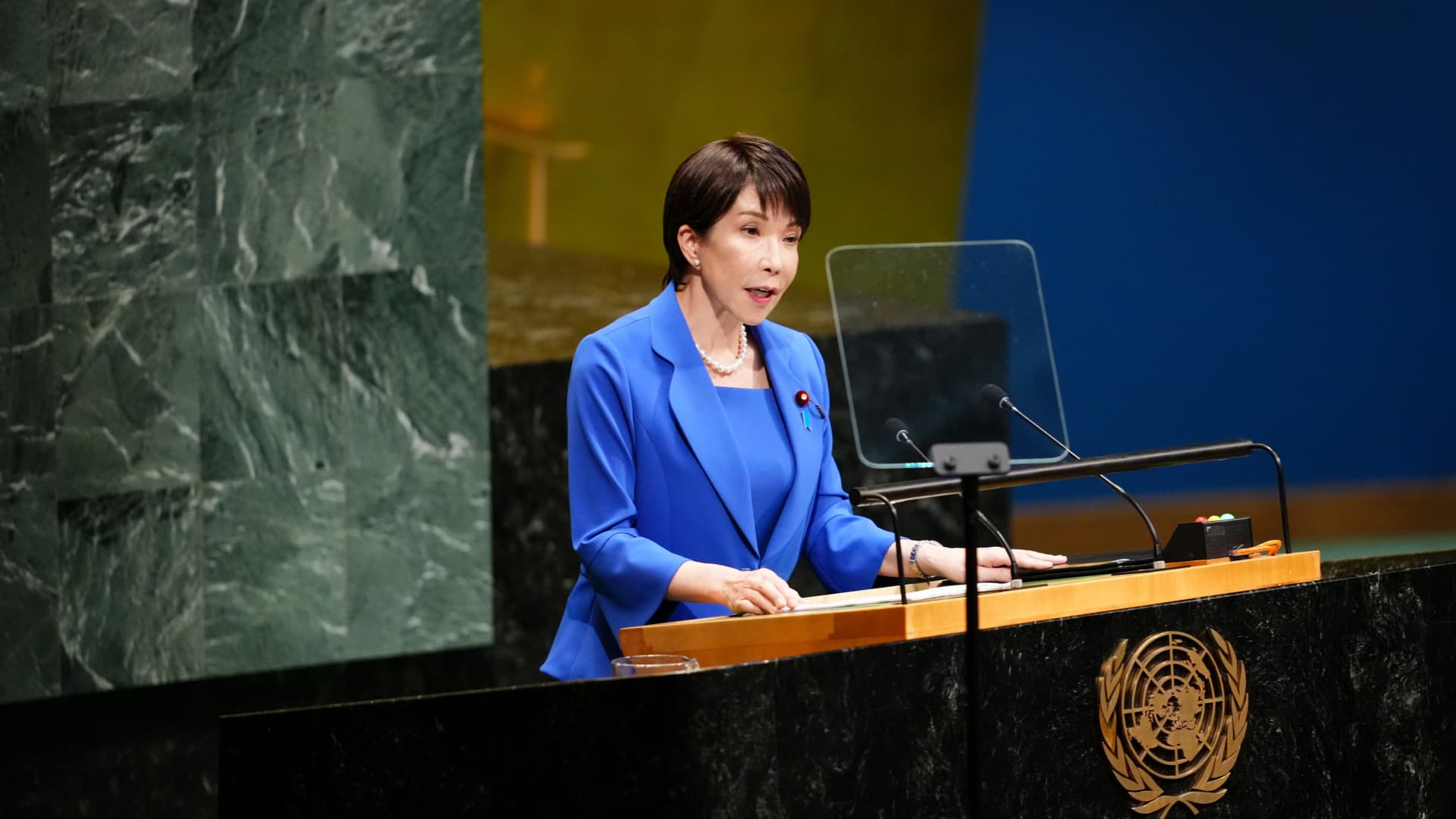
Sanae Takaichi, Japan's prime minister, during the United Nations General Assembly (UNGA) in New York, US, on Tuesday, Sept. 22, 2026. The theme of the 81st session of the United Nations General Assembly is "Restoring trust, managing transformation: A United Nations that delivers for all." Photographer: Angelina Katsanis/Bloomberg via Getty Images Bloomberg | Bloomberg | Getty Images Japan's Prime Minister Sanae Takaichi has rejected criticism that she was on one hand responsible for a weak yen and on the other for pushing up interest rates in the country. Speaking in parliament, Takaichi said; "I have been repeatedly criticized for 'Takaichi's weak yen' and 'Takaichi's high interest rates,' but I clearly deny that," according to a Reuters translation of her remarks in Japanese.
She was responding to a question from an opposition party lawmaker Yoshifumi Hamano, who asked about the compilation of a second supplementary budget for the country. Takaichi also said that her administration will increase confidence in the yen by building a strong economy. Under her administration, yields on Japanese government bonds have risen to multi-decade highs, while the yen weakened to its lowest since 1986, prompting Tokyo and even Washington to step into the forex market to support the currency.
Stock Chart IconStock chart icon In January, Takaichi had reportedly said that a weak yen presented an opportunity for export industries and acted as a buffer against U.S. tariffs, though she quickly clarified that she held no specific preference for the currency's direction. Japan's exports have been partly boosted by yen's depreciation, as a weak currency makes exports more competitive. For bond markets, Takaichi said that "We intend to appropriately control the amount of government bond issuance," at a time when yields have been rising as Japan's central bank raises its policy rate and continues to normalize its monetary policy.
Stock Chart IconStock chart icon Earlier this year, Takaichi had announced a plan to cut the country's food tax and unveiled a supplementary budget earlier this year, raising the possibility that Japan might need to issue more bonds to sustain its government spending. Takaichi has said that the total bond issuance for calendar year 2026 would remain unchanged from the original budget plan, according to Bloomberg , although experts were skeptical. Jesper Koll, expert director at Monex Group told CNBC back in April — when the supplementary budget was announced — that "Bond markets are a lot of things, but they're not stupid.
You cannot increase spending without increasing debt."
Source: CNBC